Free Shipping – Store Wide
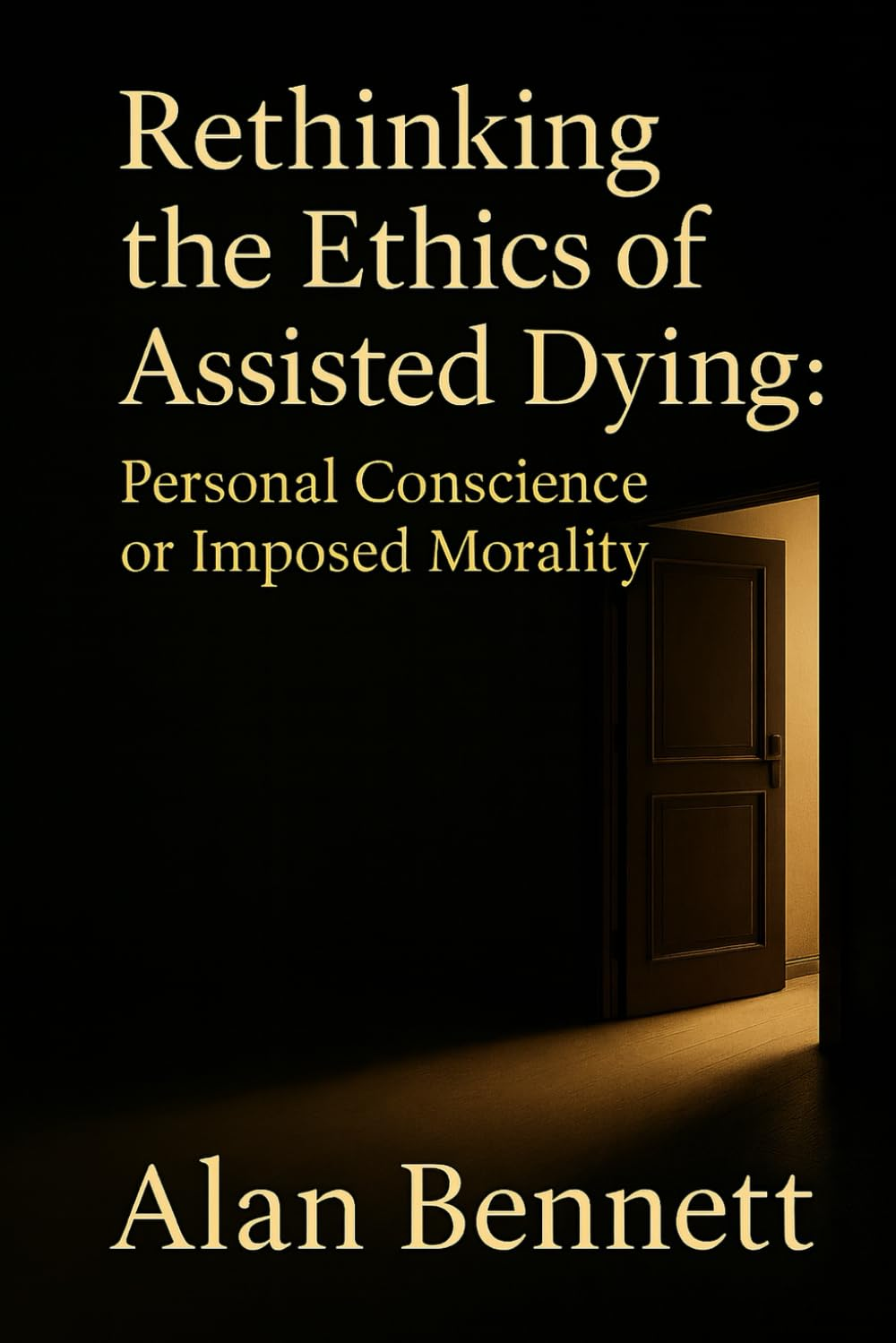
Rethinking the Ethics of Assisted Dying:: Personal Conscience or Imposed Morality
Rethinking the Ethics of Assisted Dying:: Personal Conscience or Imposed Morality
A$34.95
Rethinking the Ethics of Assisted Dying: Personal Conscience or Imposed Morality is a penetrating exploration of one of the most urgent and contested moral questions of our age: how we die, and whether we may be assisted in doing so.
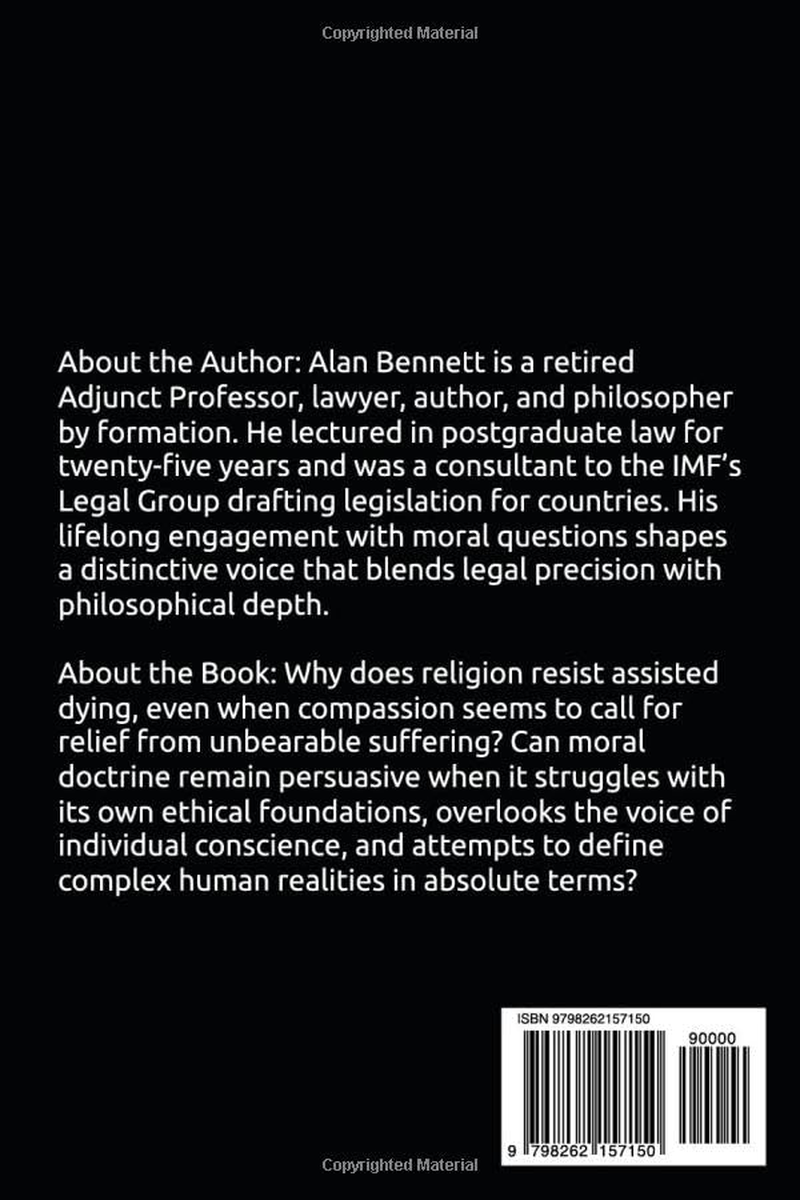
Born from the author’s lived experience at the bedside of his mother during a decade-long decline, this book refuses easy answers. Instead, it takes readers on an honest journey through law, theology, philosophy, and lived human suffering. Alan Bennett, a lawyer and philosopher with decades of teaching and international practice, examines how inherited doctrines—shaped by ancient Greek philosophers and refined by centuries of Catholic theology—still dominate modern debates about assisted dying.
The book identifies six “pillars” underpinning religious opposition—sanctity of life, divine stewardship, divine sovereignty, natural law, redemptive suffering, and fear of social harm—and subjects each to rigorous testing against contemporary realities. With clarity and compassion, Bennett asks whether these pillars can still bear the weight of lived experience or whether they crumble under scrutiny.
This inquiry is not confined to Catholicism. Judaism, Islam, Hinduism, Buddhism, Confucianism, Taoism, Shinto, and secular ethics are all examined, revealing a wide moral landscape in which end-of-life choices are shaped by cultural traditions, legal systems, and shifting understandings of human dignity. From the Netherlands to Japan, Canada to New South Wales, the book compares how law and culture converge—and collide—when facing the question of assisted dying.
Yet at its core, this work is about conscience. Can a faithful believer dissent from absolute prohibitions when faced with unbearable suffering? Can law respect both the vulnerable and the autonomous? What happens when the language of “sanctity” or “murder” pre-decides the debate before facts are even considered? Bennett insists that conscience, not blind obedience, is the truest moral compass.
This is not a polemic, but a reckoning. It challenges readers—believers and sceptics alike—to confront whether our inherited moral frameworks still serve the living and the dying. It does not seek to persuade through sentiment, but through disciplined reasoning enriched by compassion.
For lawmakers and judges drafting humane legislation, for doctors and caregivers navigating daily dilemmas, for ethicists, theologians, and seekers of truth, and for anyone who has sat at a bedside and wondered whether a kinder way was possible—this book offers a rare blend of intellectual depth and human empathy.
By the final chapter, readers will have journeyed across centuries of thought, through conflicting doctrines and lived tragedies, toward the possibility of a more coherent and compassionate ethic of dying.
- Publisher: Independently published
- Dimensions: 15.24 x 2.31 x 22.86 cm
- Language: English
- Print length: 363 pages
- Item weight: 621 g
- Book Type: Paperback
- ISBN-13: 979-8262157150
- Publication date: 25 August 2025
A$34.95
Shipping to Australia
Delivery time varies by location
Return & Refund Policy
Check our return & refund policy
Security & Privacy
Safe payments: We do not share your personal details
Availability:
-
In Stock
Sign in
or create an eMega account
Shop smarter — get exclusive deals & order tracking