Free Shipping – Store Wide
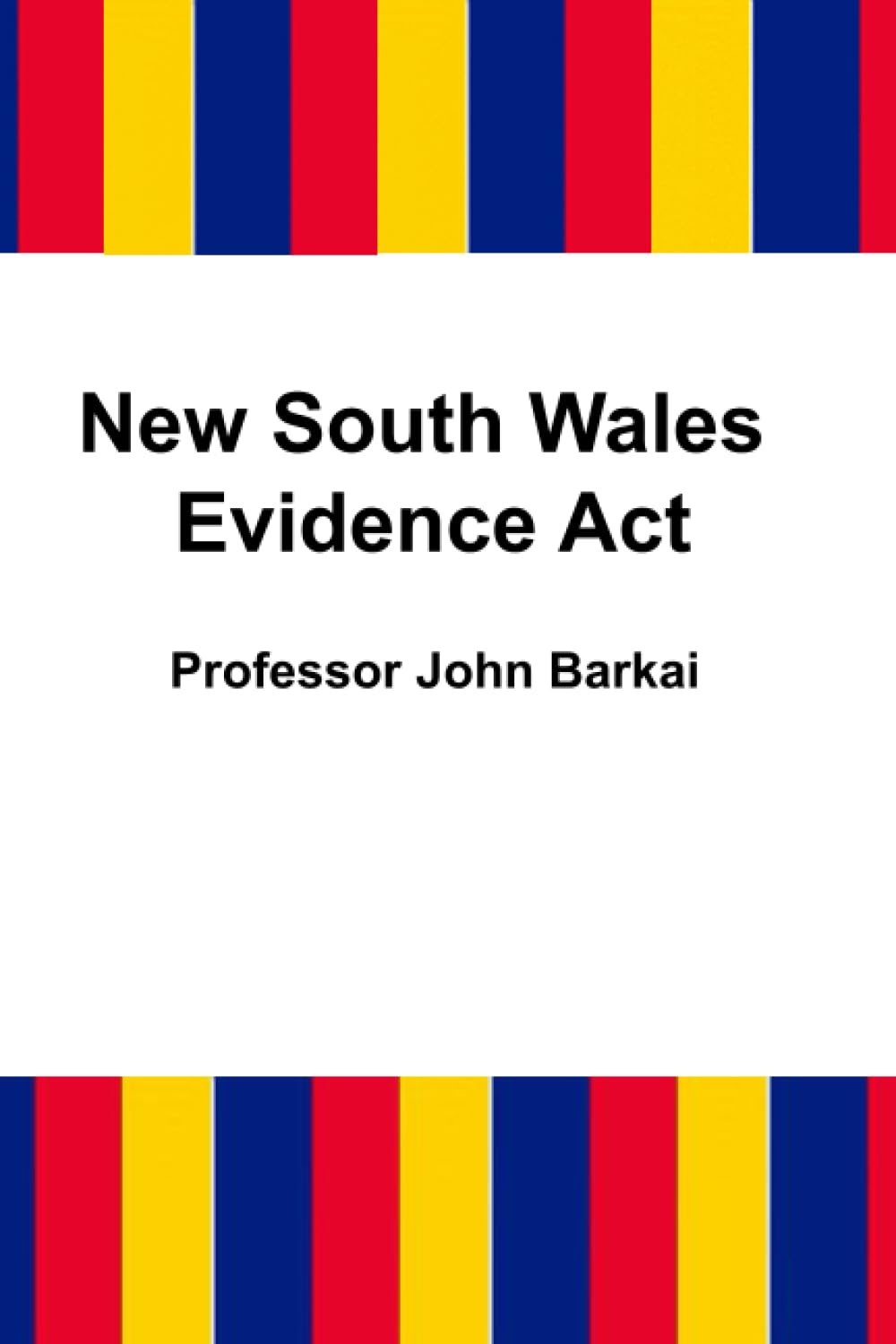
New South Wales Evidence Act
New South Wales Evidence Act
A$15.20
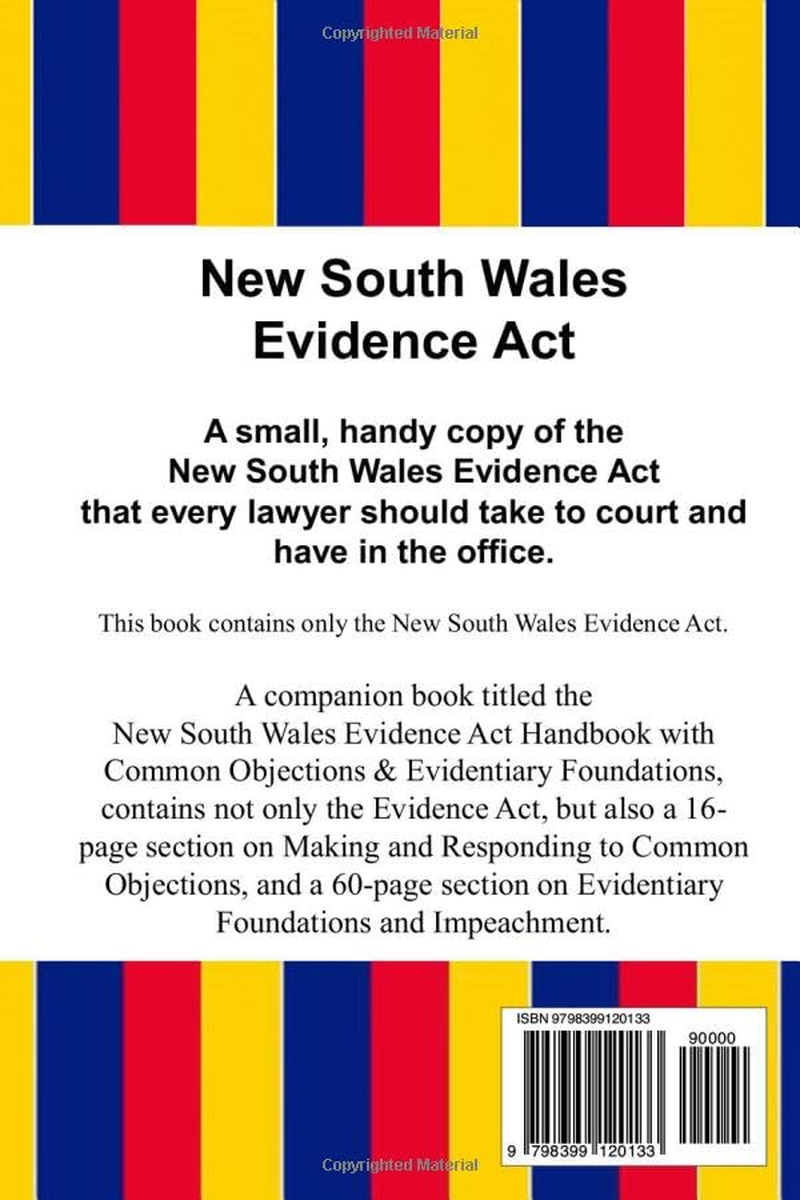
This small handy, book of the New South Wales Evidence Act was designed to be brought to court and be at your side in the office. This book contains the full New South Wales Evidence Act complete with the 2022 amendments, which are the most recent.
A companion book titled, the New South Wales Evidence Act Handbook with Common Objections & Evidentiary Foundations, contains all the evidence act rules in this book plus a 16-page section on making and responding to common objections as well as a 60-page section on evidentiary foundations and impeachment. That section on foundations and impeachment contains more than 25 examples of the most common evidentiary foundations used in United States courts and a brief discussion of differing standards for authenticating digital evidence (such as email, text messages, social media sites, and internet cites). Those examples are not intended to suggest what you must do to admit evidence in Australia, but they can provide some guidance on how you can help to develop your country’s standards for the admission of such evidence.
John Barkai is an American law professor who was a Michigan criminal trial lawyer and has been a full-time law professor for 50 years, - a professor at the University of Hawaii Law School for the past 45 years and at Wayne State Law School in Detroit Michigan for 5 years in the 1970s. His students, under his supervision, in Hawaii and Michigan have represented real clients in real cases every year he has been teaching. He has taught evidence since 1981 and has been the Director, and now Co-Director, of the Law School's Clinical Program since 1978. He has been a member of the Hawaii Supreme Court's Standing Committee on the Rules of Evidence since 1993. For the past 50 years, he has taught a criminal clinic in which his students try traffic and minor criminal cases under the state student practice rule.
He has published more than 95 other low-cost evidence handbooks (currently available exclusively on Amazon) for all 50 U.S. states and territories, and as well as American Samoa, Chuuk, Federated States of Micronesia, Guam, Kosrae, Marshall Islands, Northern Mariana Islands, Palau, Pohnpei, Yap, Puerto Rico, and U.S. Virgin Islands. He has published other handbooks such as this one for other jurisdictions that use evidence acts, including Australia (including books for New South Wales and Victoria), Bangladesh, Canada (including books for Alberta, British Columbia, and Ontario), India, Malaysia, New Zealand, Papua New Guinea, Singapore, and Samoa). He offers on Amazon two cartoon captioning contest books on the topics of trial evidence as well as negotiation & ADR. And don’t miss his Amazon book on what to say to break impasses in negotiation and mediation, called Negotiation and Mediation Communication Gambits for Breaking Impasses and More.
A companion book titled, the New South Wales Evidence Act Handbook with Common Objections & Evidentiary Foundations, contains all the evidence act rules in this book plus a 16-page section on making and responding to common objections as well as a 60-page section on evidentiary foundations and impeachment. That section on foundations and impeachment contains more than 25 examples of the most common evidentiary foundations used in United States courts and a brief discussion of differing standards for authenticating digital evidence (such as email, text messages, social media sites, and internet cites). Those examples are not intended to suggest what you must do to admit evidence in Australia, but they can provide some guidance on how you can help to develop your country’s standards for the admission of such evidence.
John Barkai is an American law professor who was a Michigan criminal trial lawyer and has been a full-time law professor for 50 years, - a professor at the University of Hawaii Law School for the past 45 years and at Wayne State Law School in Detroit Michigan for 5 years in the 1970s. His students, under his supervision, in Hawaii and Michigan have represented real clients in real cases every year he has been teaching. He has taught evidence since 1981 and has been the Director, and now Co-Director, of the Law School's Clinical Program since 1978. He has been a member of the Hawaii Supreme Court's Standing Committee on the Rules of Evidence since 1993. For the past 50 years, he has taught a criminal clinic in which his students try traffic and minor criminal cases under the state student practice rule.
He has published more than 95 other low-cost evidence handbooks (currently available exclusively on Amazon) for all 50 U.S. states and territories, and as well as American Samoa, Chuuk, Federated States of Micronesia, Guam, Kosrae, Marshall Islands, Northern Mariana Islands, Palau, Pohnpei, Yap, Puerto Rico, and U.S. Virgin Islands. He has published other handbooks such as this one for other jurisdictions that use evidence acts, including Australia (including books for New South Wales and Victoria), Bangladesh, Canada (including books for Alberta, British Columbia, and Ontario), India, Malaysia, New Zealand, Papua New Guinea, Singapore, and Samoa). He offers on Amazon two cartoon captioning contest books on the topics of trial evidence as well as negotiation & ADR. And don’t miss his Amazon book on what to say to break impasses in negotiation and mediation, called Negotiation and Mediation Communication Gambits for Breaking Impasses and More.
- Publisher: Independently published
- Dimensions: 15.24 x 0.71 x 22.86 cm
- Language: English
- Print length: 121 pages
- Item weight: 240 g
- Book Type: Paperback
- ISBN-13: 979-8399120133
- Publication date: 20 June 2023
A$15.20
Shipping to Australia
Delivery time varies by location
Return & Refund Policy
Check our return & refund policy
Security & Privacy
Safe payments: We do not share your personal details
Availability:
-
In Stock
Sign in
or create an eMega account
Shop smarter — get exclusive deals & order tracking